


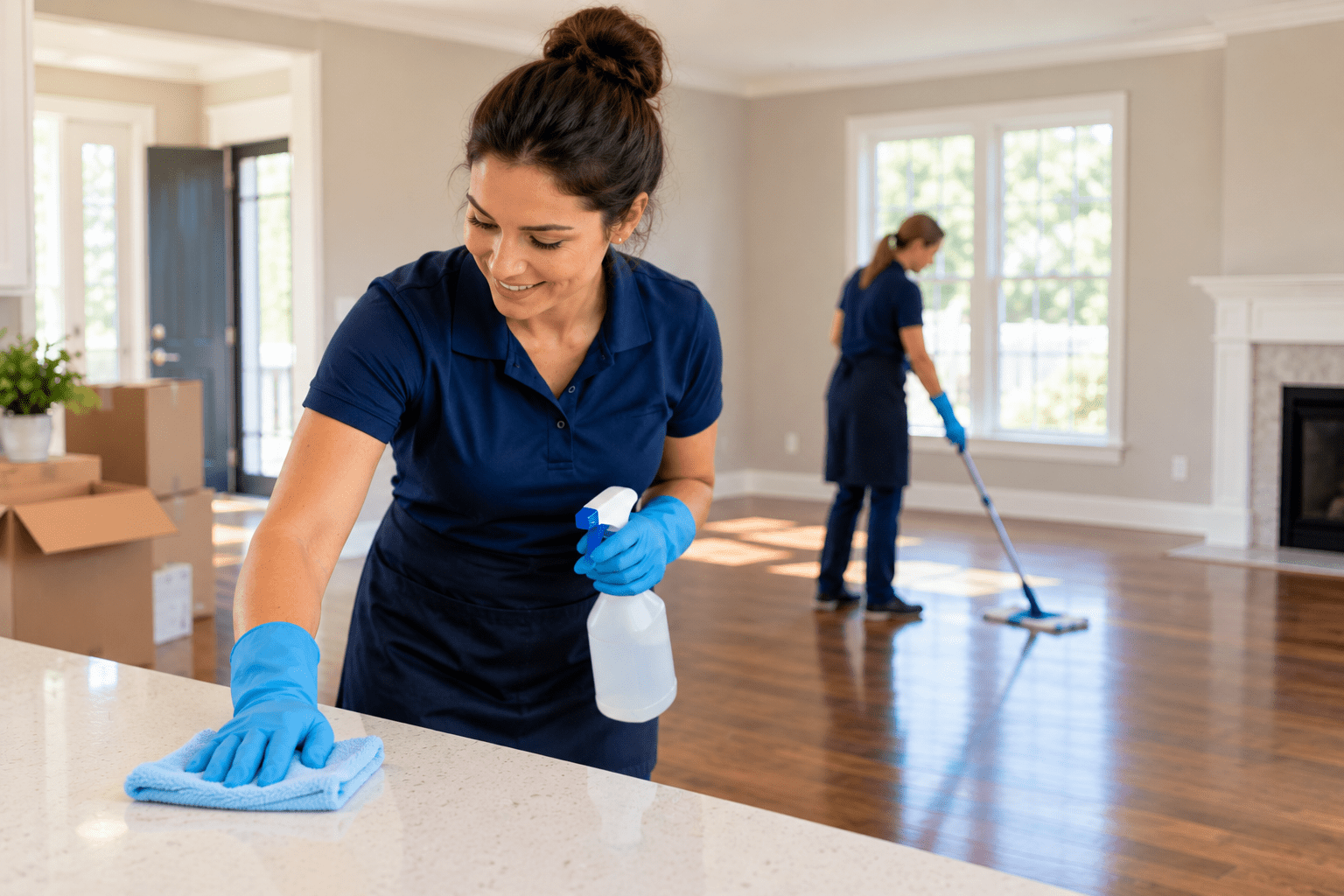
An empty property can look clean from the doorway and tell a very different story once you open the cabinets.
Dust remains on shelves. Crumbs hide inside drawers. Bathroom fixtures have residue around the edges. Baseboards show months of buildup. Previous occupants may have vacuumed before leaving, but that does not necessarily mean the property is ready for whoever comes next.
A professional move-in or move-out cleaning in Huntsville should address the surfaces and areas that routine cleaning can miss, particularly once furniture and belongings are gone. For property managers, business owners, landlords, tenants, and homeowners, the goal is straightforward: leave the property clean, presentable, and ready for its next stage.
The best time to do it? Usually after belongings are removed and before the next occupant arrives.
Why an Empty Property Needs a Different Cleaning Approach
Routine cleaning is built around an occupied property.
Move-out cleaning isn’t.
Once desks, furniture, appliances, boxes, and personal belongings are removed, cleaners can finally reach areas that may have been inaccessible for years.
That’s when you notice the dust line behind a filing cabinet.
Or the dirt underneath a breakroom refrigerator.
Or the marks along the wall where furniture used to sit.
For a commercial suite, rental property, or office, this creates an opportunity to reset the space rather than simply make the visible areas look acceptable.
Professional cleaners can work through the property systematically while there are fewer obstacles in the way.
Move-Out Cleaning Should Start After the Property Is Cleared
Timing makes a major difference.
Scheduling professional cleaning while movers are still carrying boxes through the building often creates unnecessary duplication. Floors get cleaned and then walked across repeatedly. Dust is disturbed. Packaging material creates more debris.
Whenever possible, finish moving first.
Then schedule the cleaning.
For businesses relocating offices, coordinate the cleaning appointment with your moving company, property manager, and key-return deadline. Leaving a reasonable window between the move and final inspection gives you time to address unexpected problems.
Trying to move, clean, inspect, and return keys within the same two-hour period is asking for stress.
What Should Be Included in Move-Out Cleaning?
The exact scope should always be confirmed with your cleaning provider, but a detailed move-out service commonly addresses areas such as:
- Floors and carpeting
- Baseboards
- Accessible shelving
- Cabinets and drawers
- Countertops
- Sinks and fixtures
- Restrooms
- Breakrooms or kitchens
- Interior doors
- Accessible ledges
- Empty closets
- Dust on reachable surfaces
Additional services may be necessary depending on the condition of the property.
Never assume that tasks such as interior window cleaning, carpet extraction, wall washing, appliance interiors, or removal of abandoned items are automatically included.
Ask before the appointment.
A clear scope prevents surprises on both sides.
Move-In Cleaning Is About Knowing Your Starting Point
Moving into a property creates a different concern.
You don’t necessarily know how thoroughly the previous occupant cleaned it.
A space can smell fresh and still have dirty cabinets, dusty shelves, neglected restroom corners, or debris inside drawers.
For a business, professional move-in cleaning gives employees a cleaner starting point before desks, computers, merchandise, files, and equipment arrive.
That’s much easier than trying to perform detailed cleaning after the office is fully operational.
Imagine discovering that every cabinet in the employee breakroom needs attention after you’ve already stocked them.
Cleaning first saves that headache.
Property Managers Have a Narrow Turnaround Window
Property managers often face a particularly difficult schedule.
One tenant leaves Friday.
Repairs happen Saturday.
The next tenant wants access Monday.
That doesn’t leave much room for error.
A planned Property Management Cleaning process can make turnovers more predictable. Instead of waiting until the last minute, establish what happens after a tenant vacates.
First, remove abandoned property and trash.
Next, complete repairs, painting, or maintenance that could generate dust.
Then bring in the cleaning team.
Finally, perform the property inspection.
That order helps prevent cleaners from finishing their work only to have contractors walk in and create another layer of dust.
Offices Need More Than a Quick Vacuum
Office turnovers create cleaning problems that aren’t always obvious.
Workstations may have hidden dust underneath them. Breakrooms accumulate food residue. Restrooms need detailed attention. Corners that were blocked by filing cabinets or equipment may not have been accessible during regular Office Cleaning.
High-touch surfaces deserve attention too, particularly if fixtures or shared equipment will remain for the next occupant.
Door handles, light switches, counters, cabinet pulls, and similar surfaces may all be part of the turnover scope.
A professional cleaning company should evaluate the actual property rather than treating every office move as an identical checklist.
Construction and Repairs Can Change the Cleaning Plan
Tenant turnover often involves more than moving.
A landlord may repaint.
A business might install new flooring.
Contractors may repair drywall, replace fixtures, or modify office layouts.
Once that happens, ordinary move-in cleaning may no longer be enough.
Construction dust behaves differently from everyday household or office dust. Fine particles can settle on ledges, flooring, trim, cabinets, and other surfaces long after the contractor leaves.
In those situations, Commercial Deep Cleaning or post-construction cleaning may be more appropriate.
Schedule cleaning after the dust-producing work is finished, not before.
Don’t Forget the Areas People Inspect First
Not every surface influences perception equally.
If you’re turning over a commercial property, focus closely on the entrance, reception area, restrooms, floors, and breakroom.
Why?
Those are places new tenants, employees, customers, or property representatives tend to notice immediately.
Dirty corners in a restroom can undermine the impression created by freshly painted walls.
A sticky breakroom cabinet can make an otherwise attractive office feel neglected.
Details matter most when someone is seeing a property for the first time.
Huntsville Moves Bring Seasonal Challenges
The time of year can affect the condition of a property during a move.
Rain can lead to tracked-in dirt and moisture.
Warm Alabama weather can make moving days messy when doors remain open for extended periods and crews continuously travel between the building and parking areas.
Pollen and outdoor debris can also find their way inside.
This is another reason final floor cleaning should happen toward the end of the process.
There’s little benefit in thoroughly mopping an entryway while movers are still making 40 trips through it.
A Cleaning Checklist Helps Prevent Missed Areas
Before your cleaning appointment, walk through the empty property.
Open cabinets.
Look inside closets.
Check behind doors.
Inspect corners and baseboards.
Look at flooring where furniture used to sit.
Check restrooms and kitchen areas carefully.
Make a note of anything unusual and discuss it with the cleaning company before work begins.
If you’re a property manager handling multiple turnovers, consider creating a standard inspection checklist. It can help your team communicate expectations consistently across properties.
Common Move-In and Move-Out Cleaning Mistakes
The biggest mistake is waiting until the final moment.
The second is assuming “clean” means the same thing to everyone.
Another common problem is scheduling cleaners before contractors have finished repairs.
Finally, don’t leave unwanted furniture, boxes, or trash behind and assume a cleaning company will automatically remove it. Cleaning and junk removal are different services.
Clear communication solves most of these issues.
Explain the type of property, approximate condition, deadline, previous use, and any work being completed before the cleaning appointment.
That gives the cleaners a much better chance of preparing appropriately.
Frequently Asked Questions About Move Cleaning
When should I schedule move-out cleaning?
Ideally, schedule cleaning after furniture and belongings have been removed but before the final walkthrough or key-return deadline. If repairs are planned, complete dust-producing work first.
Is move-in cleaning different from regular cleaning?
Yes. Move-in cleaning typically focuses on preparing an empty property for new occupants and may address cabinets, shelving, closets, baseboards, and areas that aren’t normally accessible during routine cleaning.
Do offices need professional cleaning before a new tenant moves in?
It is often a practical choice, especially when the previous tenant’s cleaning standards are unknown. Cleaning an empty office is also easier before furniture, technology, and employees arrive.
Is post-construction cleaning the same as move-in cleaning?
Not necessarily. Construction and renovation can produce fine dust and debris requiring a different scope. Tell your cleaning provider about recent construction so the appropriate service can be recommended.
Make the Final Walkthrough a Better One
Whether you’re handing over a rental, relocating a company, preparing an office for new employees, or moving into a new property, cleaning is easiest to manage when it is treated as part of the transition rather than a last-minute chore.
Finish the move. Complete repairs. Give the cleaners access to the empty property. Then inspect the results before the keys change hands.
Rosie Cleans Huntsville provides Move In / Move Out Cleaning for homes and businesses in Huntsville, Alabama. If you’re preparing for an upcoming move or property turnover, discussing the property’s condition, timeline, and cleaning priorities in advance can help you choose the right service and make move day considerably less complicated. Call us at 256-469-1885 or book an appointment online.


